


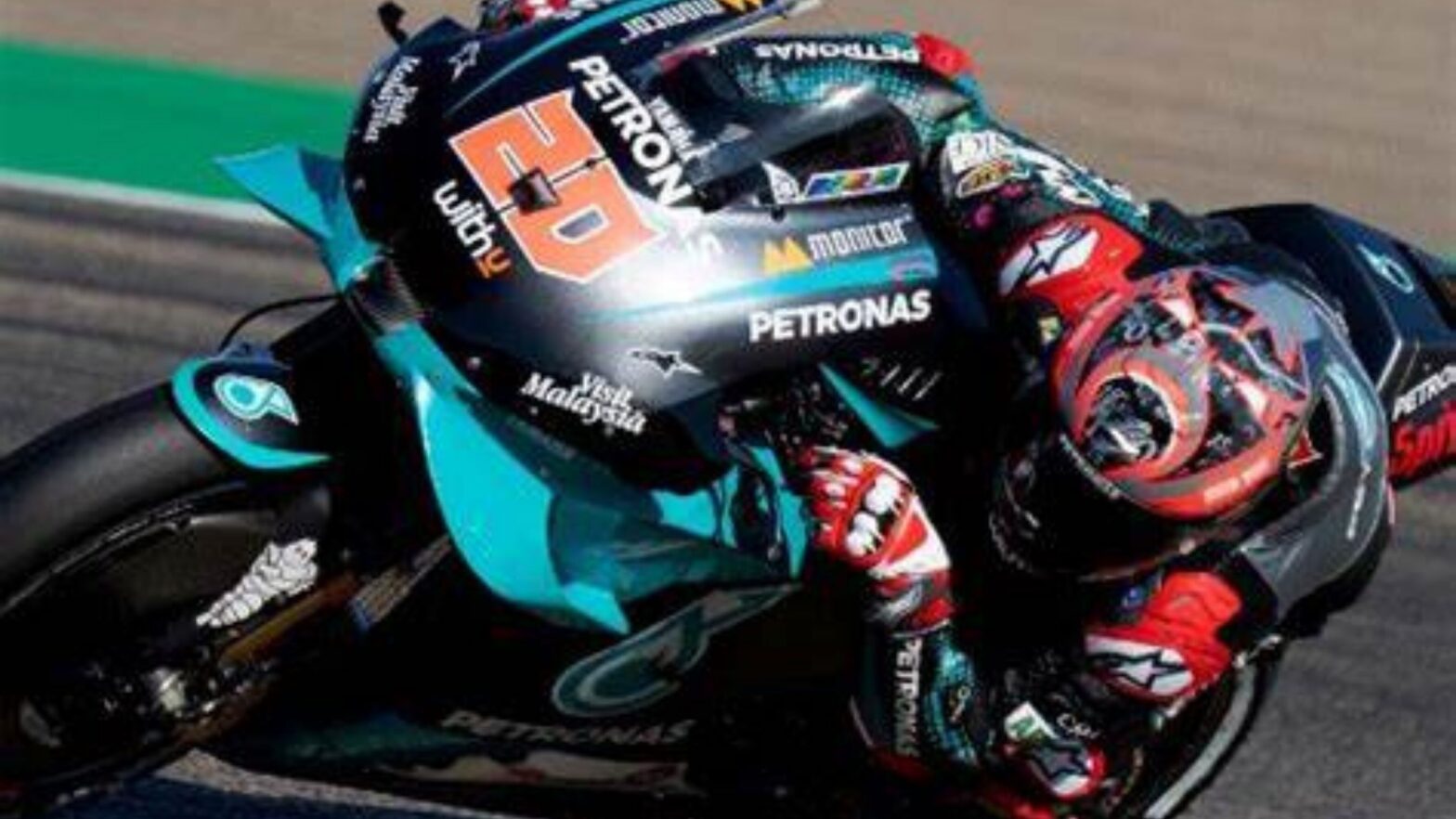
MotoGP Safety: Witness and educate yourself about the premier class of motorcycle road racing events which take place every season
Grand Prix Motorcycle Racing is regarded as the host platform for the World’s Best Two-Wheeler Racers. It was started as an FIM Road Racing World Championship Grand Prix was first organized by the Federation Internationale de Motocyclisme in 1949.
Since then the sport has seen multiple shifts in dynamics, the core has remained the same wherein each event takes place over a 3-day phase, which involves practice sessions, qualifiers and then main race.
Races are contested on tarmac circuits that are typically 4 to 5 kilometers long. This signifies a total race distance of between 110-120km taking around 40 minutes to complete.
MotoGP Safety: Change in the World of Moto GP Over the Years
In 2002, rule changes were introduced to facilitate the phasing out of the 500 cc two-strokes. The premier class was re branded MotoGP, as manufacturers were to choose between running two-stroke engines up to 500 cc or 4-strokes up to 990 cc or less. This led to two-stroke machines getting removed in the MotoGP field by 2003.
The regulation was changed again in 2004 to limit the MotoGP class to four-stroke machines only and the displacement limit was reduced to 800 cc in the regulation from the 2007 season.
MotoGP Safety Regulations
In 2010, regulations changed to limit the number of engines a single rider can use during the season to six. 2011 was the last for the 800cc machines, with regulations changing for 2012 to allow 1000cc bikes onto the grid.
After which in 2014, it was decided that all the teams participating were required to use a standard MotoGP ECU. Next in the 2015 season, it was decided that all engine management systems including injectors, bypass systems, variable intake systems and ignition must be operated exclusively by the original and unmodified ECU signal.
With all these changes, MotoGP is firmly in a new era. The machines achieve a maximum output of over 240 HP and reaches an average speed over 340km/hr. The latest electronic control technology is employed throughout.
Is MotoGP Safe?: MotoGP Safety Gear
Just like any other racing series such as Formula 1, Le Mans, the MotoGP also involves a certain risk when the machines are running at such a high speed. Talking about the Formula 1 cars, a driver’s safety is placed as utter priority as they are fully covered to endure the worst of accidents and collision.
But in MotoGP, when a racer is driving a bike, the risk increases as there are no doors to protect the individual from falling side ways. Yet there hasn’t been a fatality, since the death of Daijiro Kato in the 2003 MotoGP opening round at Suzuka.
So, is MotoGP Safe, in the modern-era? Talking about the modern-day gears of the MotoGP racers, commencing from 2018, all MotoGP categories require race suits with a built-in airbag, which is one of the most advanced safety systems GP participants have available.
Apart from this the gear comprises of several protective elements, including protective pieces in the suits, knee sliders and elbow pads along with a helmet.
Also Read: Richest F1 Driver: Richest F1 Driver Net Worth And Career